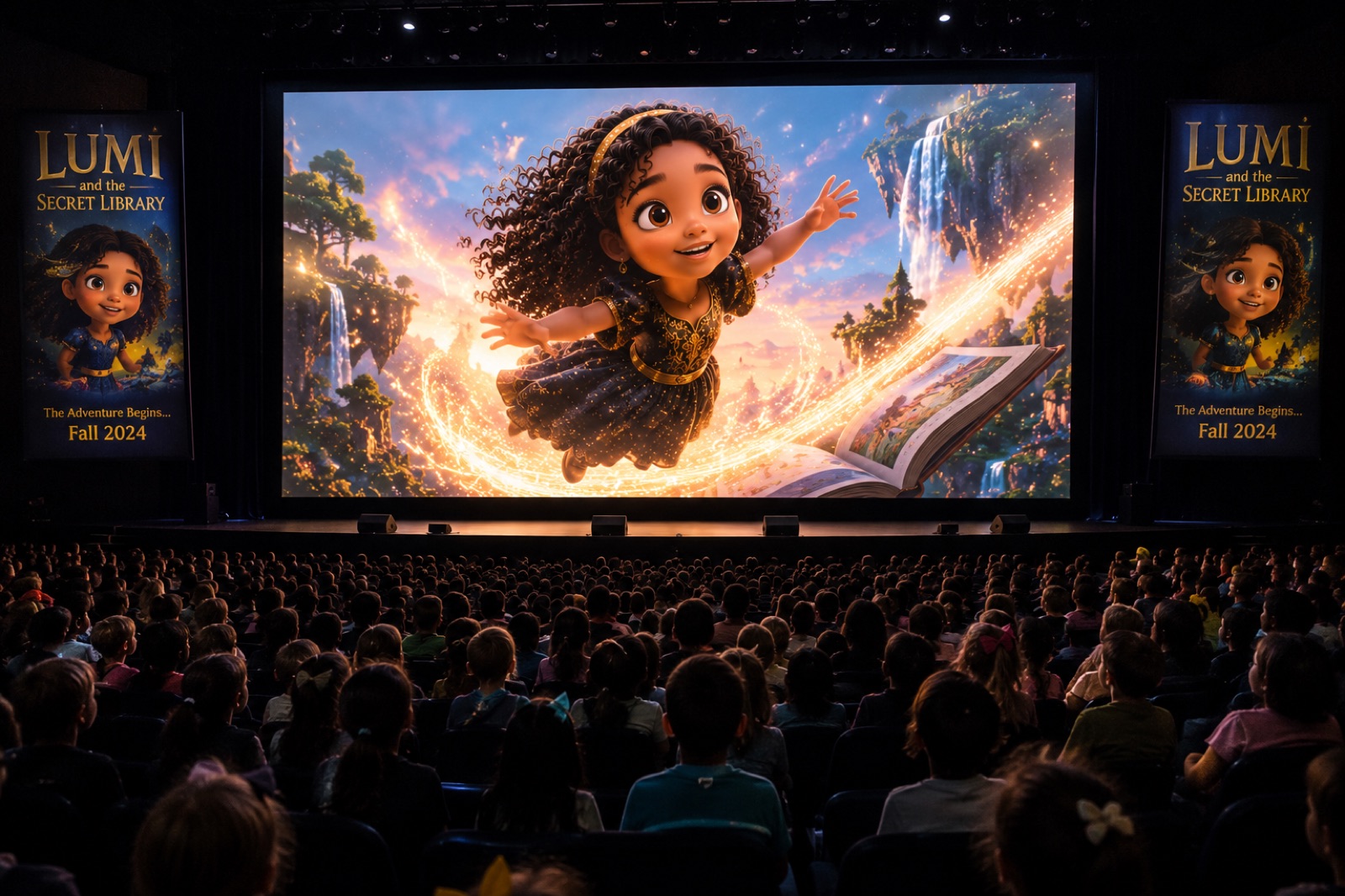
What a children's book trailer is actually for
A trailer has one job: make a stranger feel your book in under thirty seconds. Not summarise it — feel it. Children's books have an unfair advantage here: they're already visual, already emotional, already built around a character a viewer can love at first sight. A good trailer just lets the book do what it already does, in motion.
The anatomy of one that works
- Seconds 0–3: the hook. Your character, moving, immediately — not your logo, not a quote card. The viewer decides everything in this window.
- Seconds 3–15: the feeling. One or two scenes that carry the book's emotional core. For a friendship story, the moment of friendship; for a brave-little-heart story, the moment of courage. Resist the plot summary.
- Seconds 15–25: the turn. The lightest touch of stakes — the goodbye, the storm, the question — so the ending lands.
- Final seconds: title, cover, one action. "Available on Amazon" or your site. One instruction, not three.
Length and formats (the practical part)
15–30 seconds is the working range. Attention on every platform collapses beyond that; save longer cuts for launch events. Insist on three deliverables: vertical 9:16 for Reels/TikTok/Shorts, square 1:1 for feeds, and widescreen 16:9 for YouTube and the school projector — the same trailer, correctly framed for each, so you never post a letterboxed compromise.
The style question, again, because it decides everything
A trailer that doesn't look like your book is an ad for a product that doesn't exist. Whatever you're quoted, apply one test: book page and trailer frame, side by side — same art? Trailers we build start with a style analysis of your actual illustrations, and the characters keep their exact features across every scene, because a child who meets your character in the trailer must find the same friend inside the book.
Music, sound and captions
Music should be original or properly licensed — never a commercial track you don't hold rights to, which can mute your video or worse. And caption everything: most feed viewing is silent, and school settings often play video muted while a teacher talks. A trailer that works with the sound off works everywhere.
Where a trailer earns its keep
Pinned to every social profile · opening your school-visit pitch email (the single biggest reply-rate lever we've seen) · playing on loop at fairs and launch events · on your Amazon A+ content and author page · in your email signature. One well-made trailer is not a video — it's infrastructure. Ours start at $4,997, scenes at $697, and every author starts the same way: a free 24-hour preview of your character, so you can see the standard before spending anything.