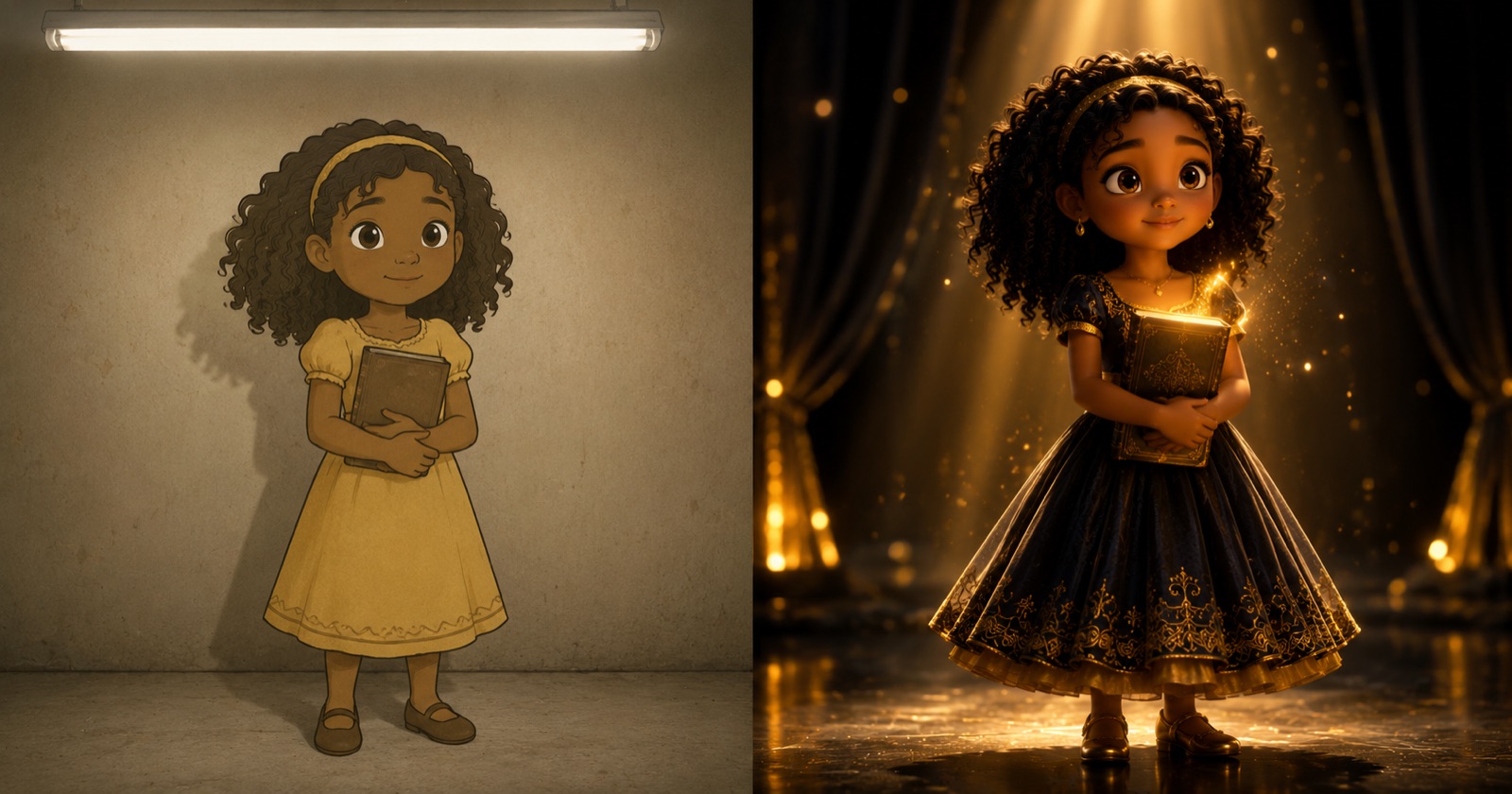
The short version
Traditional animation buys you total control at a price almost no self-published author can justify. Modern tool-assisted animation buys you 90% of the on-screen result at roughly 1–5% of the cost — if a human directs it properly. The honest comparison isn't "which is better." It's "which is proportionate to a book that has sold hundreds of copies and deserves to sell thousands."
What traditional animation actually costs
Hand-keyed 2D or full 3D animation from a conventional studio runs roughly $5,000–$20,000 per finished minute at the affordable end, and far beyond that for broadcast work — plus months of production and revision rounds that bill by the hour. For a publisher launching a franchise, that's a rational spend. For an author who has invested a few thousand in her book, it means the trailer costs ten times the book did. That maths is why, until recently, animated book marketing simply didn't exist for indie authors.
What changed
Generation tools collapsed the cost of producing motion. What they did not collapse is the cost of taste — knowing which output honours your illustrator's work, which motion suits a children's story, which frame has a warped hand and must be redone. That's why the market has split into two very different products that both call themselves "AI animation":
- Unsupervised output — cheap, fast, and it looks like it. Your character drifts, the style is generic, nobody checked the frames.
- Directed production — the same class of tools in the hands of people who analyse your art first, lock your character's features, iterate until it's right, and check everything at full resolution. This is what we do, and we say so openly.
Side by side, honestly
- Cost: traditional, $5K–$20K+ per minute · directed modern production, from $697 for a cinematic scene, trailers from $4,997.
- Speed: traditional, weeks to months · modern, days — our scenes deliver in 7–10 days, previews in 24 hours.
- Style fidelity: traditional wins on paper, but only if you can afford enough revision rounds; a directed modern process built from your actual illustrations is remarkably faithful in practice.
- Control: traditional gives frame-level control; modern gives scene-level control. For a 20–30 second marketing piece, scene-level is what you actually use.
- Rights: identical if you insist on it — 100% of the finished film should be yours either way. In writing.
When traditional is still the right answer
If you're producing a full series with dialogue-heavy acting, or a broadcaster is involved, or the budget genuinely exists — traditional craft still earns its price. We'd tell you so. The tools also keep improving fast, which narrows this gap every year, but character acting subtlety is still where a human animator's hand shows.
The question that actually decides it
Not "AI or traditional?" but: "Will my reader look at this and see my book?" Judge any provider — including us — by one test: the book page and the animated frame, side by side. If the answer is yes at a price proportionate to your book, the label on the method matters much less than people argue about online.